
Seasonal Cooking
The autumn plate: a season of roots, grains, and quiet reassembly
Harriet Marsden·
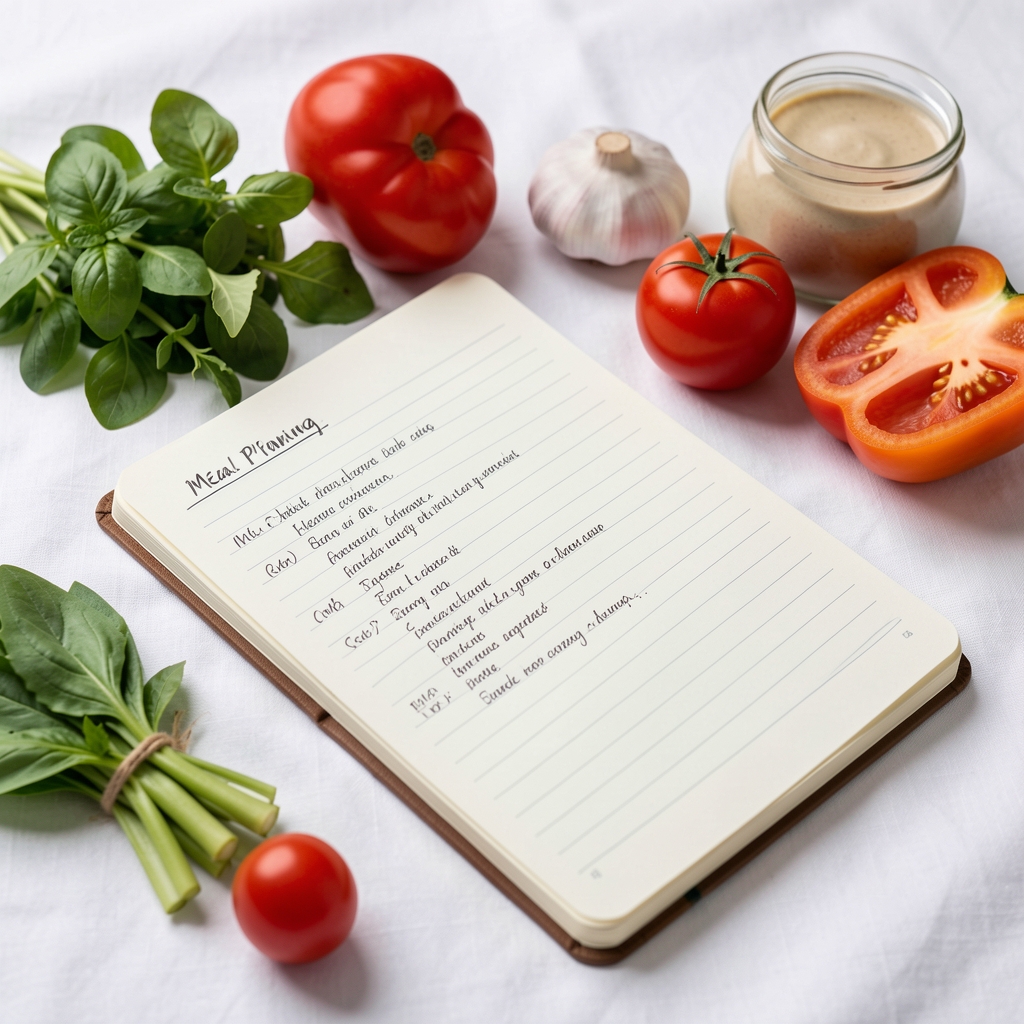
Portion awareness and advance preparation are frequently presented as systems — as things one sets up on a Sunday afternoon and adheres to with discipline through the week. In practice, the most durable version of either looks less like a system and more like a rhythm: a recurring set of small decisions made with moderate consistency rather than strict adherence. This is a record of six weeks of structured weekday cooking, and what it gradually revealed about the difference between a plan and a practice.
The dominant framing of meal planning in popular wellness discourse is one of control: the perfectly portioned containers lined up in the refrigerator, the shopping list followed without deviation, the macronutrient spreadsheet completed for the week. This framing has its uses — for those with specific dietary requirements or for professional athletes managing precise energy needs — but it is not well-suited to ordinary life, and it tends to collapse the moment something unexpected happens on a Wednesday.
A more sustainable approach to weekday food preparation starts from a different premise: that cooking a larger batch of something on a quieter evening is useful not because it eliminates choice, but because it provides a reliable foundation when fatigue or time pressure would otherwise lead to a less considered decision. The batch-cooked grain or the prepared legume is a resource, not a commitment.
Over the six weeks documented here, this distinction — between planning as constraint and preparation as resource — turned out to be the central practical finding. When the advance preparation was framed as providing options rather than prescribing outcomes, adherence was significantly higher, and the midweek collapse into poor food choices was correspondingly reduced.
Portion size is one of the more mishandled topics in everyday nutrition writing because it tends to be framed as a form of deprivation. The suggestion that one should eat less of something creates immediate psychological resistance in most people, regardless of whether the suggestion is professionally well-founded.
The observational approach to portion size — practised over the course of this six-week record — works from a different angle. Rather than beginning with a structured volume and working backward to see whether it produced satisfying meals, the approach taken here was to serve a moderate initial portion and pay attention to whether additional food was genuinely wanted after a pause. In most cases, the pause revealed that the moderate portion had been sufficient.

Batch-cooked foundations: grain and vegetable preparation. A resource, not a commitment.
This is consistent with research on appetite regulation that distinguishes between hunger — the physiological signal for caloric need — and appetite, which is shaped significantly by expectation, distraction, and the pace of eating. A meal eaten slowly, with attention to the food rather than a screen, tends to produce a more accurate read of satiety than the same meal eaten quickly while distracted.
"The batch-cooked grain is a resource, not a commitment. The difference matters — because a system collapses on Wednesday, but a resource does not."
The specific preparation routine that emerged over the six-week period was not planned in advance; it was observed as a pattern that recurred because it was low-effort and reliable. On Sunday evenings, when there was time and inclination to cook, three or four components were prepared: a large quantity of a cooked grain, a batch of roasted vegetables, a pot of cooked legumes, and a jar of a sauce or dressing that could be used across multiple meals.
These four components became the palette from which weekday lunches and many weekday dinners were assembled. The assembly itself took five to ten minutes — a grain base, roasted vegetables, legumes, dressing, and whatever fresh element was available (a handful of leaves, some sliced cucumber, a soft-boiled egg). The resulting meal was varied in flavour and texture, nutritionally broad, and required almost no active thought on the evenings when it was assembled.
The component approach also handled variation gracefully. If the grain base was pearl barley one week and brown rice the next, the entire set of meals shifted accordingly without any change to the assembly process. This structural flexibility — same process, different ingredients — turned out to be more sustainable than a fixed set of recipes that required specific ingredients each week.
The most significant observation from this period was not a change in body weight, which was not the focus of the experiment, but a change in the quality of weekday food decisions. Before the preparation routine was established, weekday cooking was reactive — driven by what was immediately available and what could be assembled most quickly. The quality of those decisions varied widely, and the less nutritionally considered choices clustered specifically at moments of fatigue, time pressure, or cognitive load from other sources.
After the preparation routine was established, the reactive decisions were largely replaced by assembly decisions — choosing how to combine pre-prepared components rather than what to cook from scratch. The cognitive demand of the latter is significantly lower, and the nutritional floor of the resulting meals — even when assembled carelessly — was substantially higher because the components themselves were nutritionally sound.
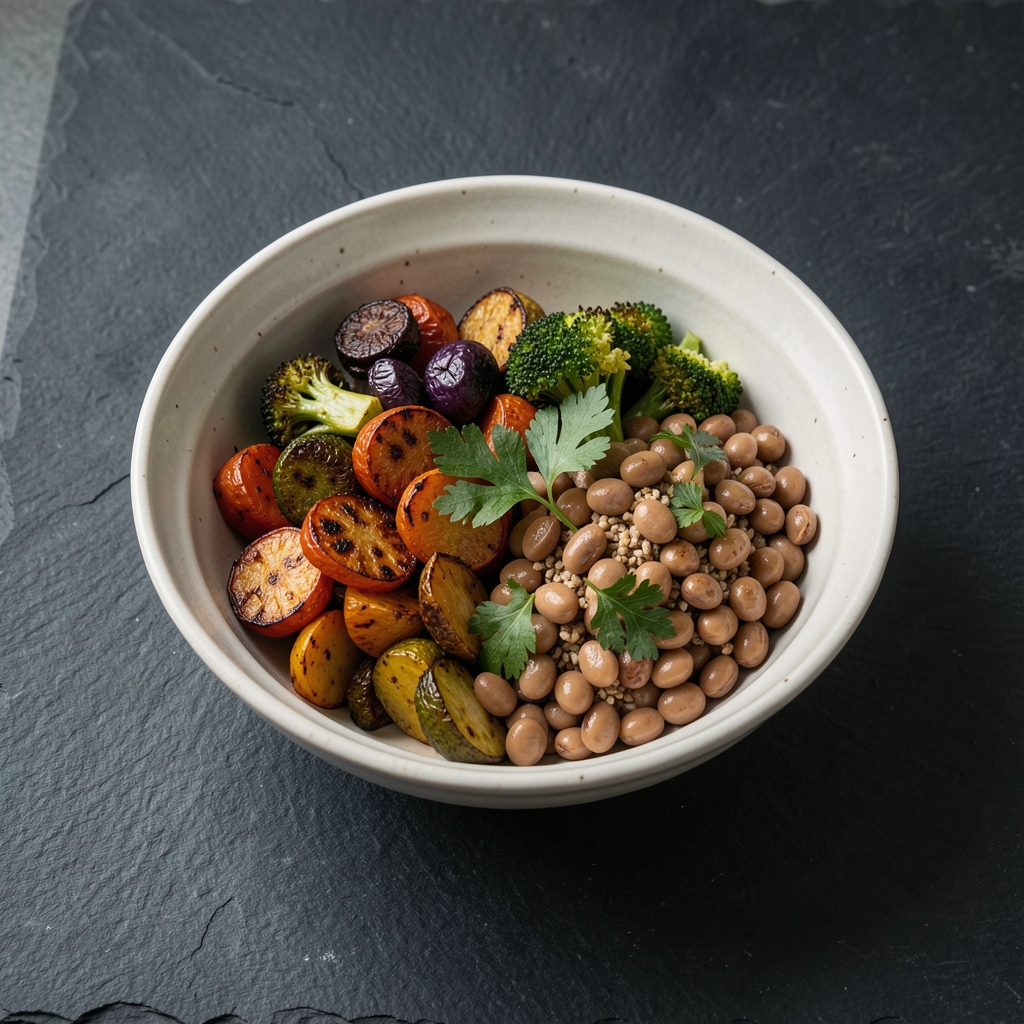
Assembly over cooking: five minutes, nutritionally sound. The practical payoff of advance preparation.
Weight management — as a long-term rather than an acute concern — is closely bound up with the quality of habitual food decisions rather than any single dietary intervention. Published research on sustainable weight outcomes consistently points to the same cluster of behaviours: dietary pattern consistency over time, meal frequency regularity, and the reduction of impulsive or distracted eating.
Advance preparation addresses all three of these behaviours without explicitly targeting any of them. A prepared kitchen reduces the frequency of impulsive decisions. Regular preparation creates meal-timing consistency. The act of preparing food attentively — washing, chopping, portioning, assembling — engages a degree of mindfulness about the food that distracted, convenience-led eating does not.
None of this requires a rigid plan or a calorie target. The argument being made here is not for precision but for an organised kitchen. The distinction, in practice, turns out to matter enormously.
Articles published on Foraleni Review are editorial in nature and reflect the writers' observations on everyday wellness practices. The content is not intended as professional advice, nor as guidance for the management of any specific condition. Readers with specific concerns about their daily routines are encouraged to speak with a qualified wellness professional.

Tobias Coverdale writes on food preparation, nutritional habits, and the practical architecture of everyday cooking. He contributes to Foraleni Review on topics related to meal planning and wholefood routines.
More from this publication